2026 Jacques Solvay International Chair in Physics
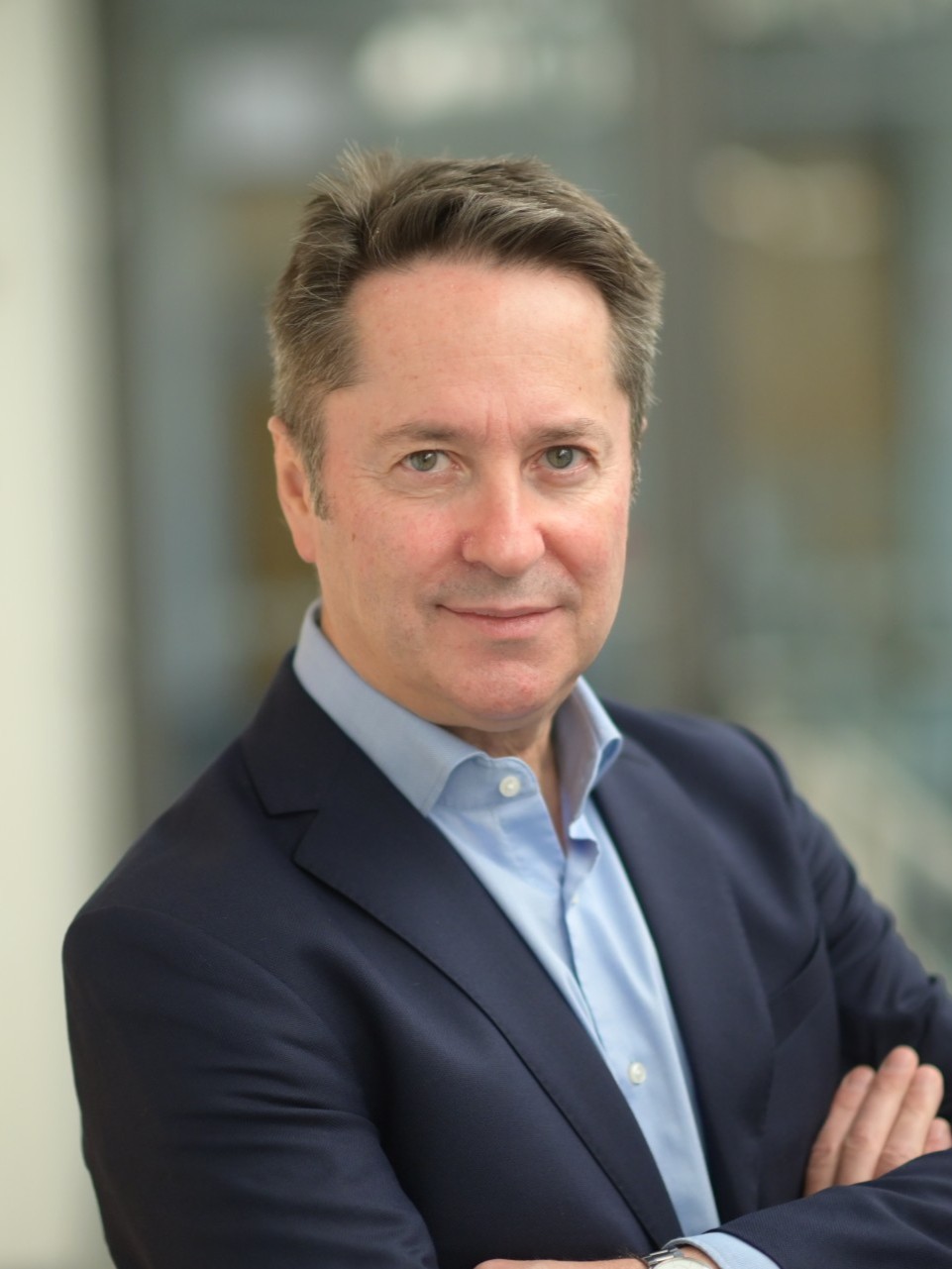
Ignacio Cirac
Max Planck Institute of Quantum Optics, Garching, Germany
Biography
J. Ignacio Cirac is a Spanish physicist, director at the Max Planck Institute of Quantum Optics in Germany. He is an expert in quantum computing and communication. With his collaborators, he introduced the first theoretical proposals of quantum computing, simulation, and communication repeaters, and developed a theory of tensor networks to solve problems in quantum physics. He studied theoretical physics and gained his PhD at the University Complutense of Madrid in 1991. After a postdoc at JILA (Boulder, US) and becoming Associate Professor at the University of Castilla-La Mancha (Spain), he became Professor of Theoretical Physics at the University of Innsbruck (Austria) in 1996. Since 2001, he has been the director of the Theory Division at the Max Planck Institute of Quantum Optics in Garching (Germany) and Honorary Professor at the Technical University of Munich. He is also the spokesperson of the International Max Planck Research School on Quantum Science and Technology, co-spokesperson of the Munich Center for Quantum Science and Technology, and coordinates the consortium on theoretical quantum computing at the Munich Quantum Valley. For his work, he has been awarded several prestigious prizes, including the Prince of Asturias Award, the BBVA Frontiers of Knowledge Award, the Benjamin Franklin Medal, the Wolf Prize, and the Max Planck Medal. He is a member of the Spanish, Leopoldina (German), National (American), and Bavarian Academies of Sciences, and holds nine honorary doctor degrees. He was a member of the board of Telefonica S.A. between 2016 and 2023.
Inaugural Lecture
Quantum Computing and Simulation in the presence of errors
8 April at 4:00 p.m. | Solvay Room
Advancements in quantum computing have enabled the development of small-scale quantum computers and simulators that adhere to the principles of quantum physics. Despite its rapid progress, those devices are not yet flawless and errors accumulate, posing serious challenges to their application to interesting problems. In this talk I will first address how those errors affect the results of both quantum computations and the simulation of quantum many-body systems. In particular, I will present several quantum simulation algorithms, and discuss the potentiality of displaying quantum advantage in the presence of imperfections.
COFFEE AND TEA WILL BE SERVED AT 3:45 P.M AND DRINKS AT 5:00 P.M. IN FRONT OF THE SOLVAY ROOM
One-Day Workshop
One-Day Workshop in Honor of Prof. Ignacio Cirac
9 April | Fondation Universitaire, Salle Félicien Cattier (11 Rue d’Egmont - 1000 Bruxelles)
A One-Day Workshop will take place on Thursday 9 April (from 10:00 to 18:00), in honor of the Solvay Chair 2026, held by Prof. Ignacio Cirac.
Keynote speakers:
Barbara Kraus (TUM): Phases of matrix-product states with symmetries and measurements
Flore Kunst (Max Planck Institute for the Science of Light): Exceptional Non-Hermitian Topology
Marco Schiro (Collège de France): Entanglement Dynamics in Monitored Quantum Systems
BQPi speakers:
Maria Balanzo Juando (ULB): All pure multipartite entangled states of qubits can be self-tested
Matthew Houtput (University of Antwerp): First principles theory of nonlinear long-range electron-phonon interaction
Clara Tanghe (University of Ghent): Non-equilibrium physics with flexible potentials on cold atoms
Colin Read (University of Liège): Dynamical decoupling of interacting qudit systems
Lectures on Tensor Networks
April Lectures
14 April at 2:30 to 4:00 p.m. | Solvay Room
Lecture 1
16 April at 2:30 to 4:00 p.m. | Solvay Room
Lecture 2
October Lectures
12 October at 10:30 a.m. | Forum H
Lecture 3
ULB Campus Plaine, Quartier Magenta – Forum, Forum H
13 October at 2:30 p.m. | Room NO.9.06
Lecture 4
ULB Campus Plaine, Quartier Jaune – Building NO, 9th Floor, Room NO.9.06
Talk on "Theoretical Physics in the Age of Artificial Intelligence: Can AI Agents Do Research?"
Theoretical Physics in the Age of Artificial Intelligence: Can AI Agents Do Research?
14 October at 1:00 to 2:00 p.m. | Solvay Room
Talk and debate with J. Ignacio Cirac
AI models are advancing rapidly in mathematics, programming, and now theoretical physics. Can they become genuine research partners? Ignacio Cirac will discuss what physics demands, from intuition and approximations to symmetries and the verification of results. He will also discuss the tools and collaborations AI agents need to contribute fully. The talk will be followed by a debate.
Barbara Kraus (Technical U. of Munich, Germany)
Quantum Cooling Algorithms: State Preparation, Efficiency, and Robustness
15 October at 2:00 p.m. | Room A2.120
Prof. Kraus will give this seminar as part of the Tensor Networks lecture series by Ignacio Cirac, Solvay Chair in Physics for 2026.
Abstract :
I will discuss two recent works on quantum cooling algorithms for preparing low-energy states of many-body systems. We analyze cooling by repeated coupling to simple auxiliary systems, characterize its efficiency and robustness to noise, and compare it with other approaches such as adiabatic evolution and QAOA. Our results identify regimes in which quantum cooling provides a simple and robust route to quantum state preparation.
References:
D. Molpeceres, S. Lu, J. I. Cirac, and B. Kraus, Quantum algorithms for cooling: a simple case study, Phys. Rev. Research 7, 033162 (2025).
D. Molpeceres, S. Lu, J. I. Cirac, and B. Kraus, Benchmark of quantum algorithms for ground state preparation in the presence of noise, arXiv:2606.20551 (2026).
Location :
ULB Campus Plaine, Quartier Magenta – Building A, Ground Floor, Room A2.120